
Hypermobility Spectrum Disorders and autoimmunity
Living with an autoimmune disease can involve navigating a complex combination of symptoms, investigations and treatments. For some people, another piece of the puzzle may be Hypermobility Spectrum Disorders (HSD)— a group of connective tissue disorders that cause a range of symptoms due to lax collagen between connective tissues.
Connective tissues carry out various important roles in the body. They make up an important part of the gut wall barrier, they contribute to proper immune function, they are part of our detoxification system, and they stabilise our joints.
When HSD is present, this means that the connective tissues do not quite work as they should, leading to problems such as leaky gut, joint pain and fatigue, issues with detoxification and immune dysfunction.
Research is current being carried out into links between HSD and Mast Cell Activation Syndrome (MCAS), common in autoimmune conditions.
Links between HSD and neurodiversity, including autism and ADHD, have also been established.
HSD can be difficult to recognise when symptoms overlap with those of an autoimmune condition (eg joint pain, fatigue, digestive upset).
Common symptoms of HSD
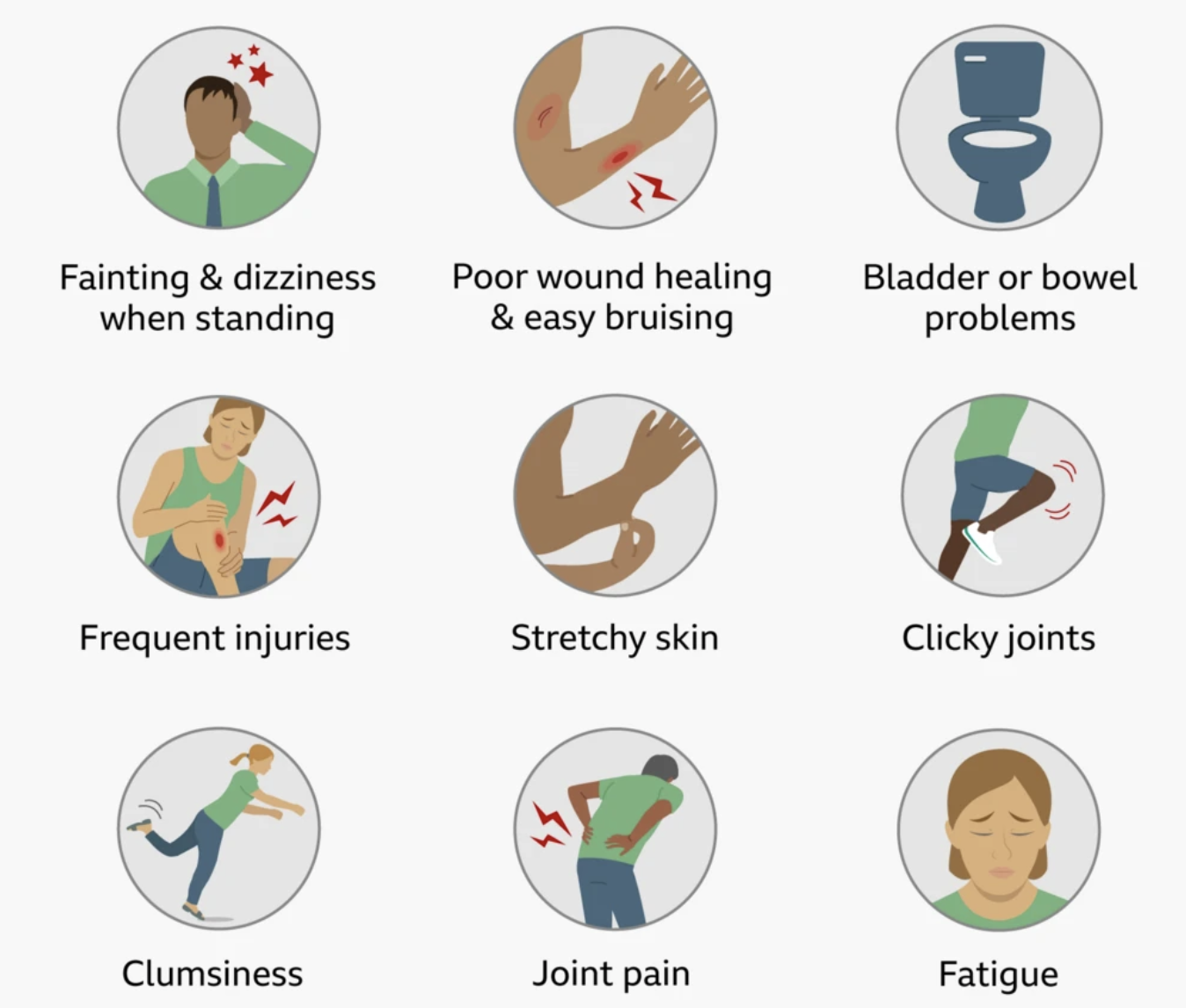
Source: BBC
Why is it useful to recognise if I have HSD?
Effective nutrition and lifestyle support works best when we can zoom out and understand the wider pattern underneath your autoimmune condition. If we know or suspect you have HSD, we know your gut wall integrity will likely be impaired, which will directly impact your autoimmune health. We can use testing and specific protocols to help you strengthen your gut wall, as well as helping you to manage the knock-on effects of having lived with ‘leaky gut’ for many years, such as food intolerances and disturbed gut microbiota.
We can zoom out further and look at the wider patterns which often exist alongside HSD. For example, neurodivergence is very common in people with HSD and autoimmunity. Above all, within an autoimmunity framework, neurodivergence impacts the nervous, digestive and detoxification systems. It can be incredibly helpful to understand if neurodivergence may be part of the picture, because we can tackle dysregulation in these systems in specific ways and really boost results. You can read more about neurodivergence and autoimmunity here.
Symptoms such as joint pain, frequent injuries and would healing can be managed much more successfully when it is recognised that HSD is part of the picture alongside the autoimmune condition (such as rheumatoid arthritis or ankylosing spondylitis). Additional support for collagen production can be helpful, as well as physiotherapy to strengthen specific muscles (where ligaments are weak). Issues such as poor wound healing can be supported properly, with extra care given where needed.
Many people with HSD go undiagnosed and therefore unsupported. The name of this condition can be misleading (appearing to focus solely on joint hyperflexibility). It is so important to realise that these disorders relate to problems with connective tissues and to look at the wider symptom picture in the image above to understand whether it is relevant to you.
It is also important to know that HSD symptoms can become worse when hormones change, eg puberty or (peri)menopause, key times for autoimmune conditions to flare as well.
HSD is common and should not be seen as an additional condition to worry about, but rather something that can help us to identify a wider pattern that holds the key to understanding how our bodies are set up and what our bodies need to thrive.
You can find out more about working with me and book a free call here.