How to get protein from plants - easy and delicious meal ideas
Research shows that many of us are becoming increasingly short of protein in our meals (particularly women). Protein works together with the fat and fibre in our meals to slow down the release of any sugars from our food. This means that we not only stay fuller for longer, but we avoid the inflammation that comes with a quick release of sugars from our food.
We also avoid the symptoms that accompany this: mood and energy crashes (especially mid-afternoon), irritability, cravings, dizziness or fatigue that improves on eating, hormonal imbalances, poor sleep - the list goes on.
Protein also increases our detoxification capacity, which is helpful in autoimmunity as we often struggle to generate sufficient capacity to get toxins out of our system.
These recipes focus on plant-based proteins, because this is where we often struggle. Plant-based proteins are less inflammatory than meat proteins and bring additional benefits such as diverse fibres that make our guts more resilient, as well as healthy fats and other vital nutrients. So it’s useful to bring more of them into our diets.
But many of us are not sure how to use plant proteins in a way that is tasty, straightforward and easily digestible.
So here a couple of examples that can help us to think about how to approach protein.
Quinoa, feta (PB option), and grape salad

Firstly, please don’t let the mention of quinoa put you off! On its own, many people find quinoa bitter and boring. But this is where we just need to understand how to construct a dish.
When we eat protein, we need to make sure we are hitting as many of the five taste buds as possible (sweet, sour, bitter, salty, umami). This generates salivation, which triggers stomach acid production. Stomach acid is essential to protein absorption.
When we are stressed, or not enjoying our food, we don’t produce enough saliva, stomach acid and other digestive juices such as bile and digestive enzymes. This means that not only do we not absorb the protein, fat, fibre and micronutrients from our food, but the incompletely digested food causes inflammation in our guts by feeding unwanted inflammatory microbes.
Stomach acid is naturally higher in the mornings, yet our western world has evolved to generally eating our highest protein meal later in the day. Stomach acid levels decline as we get older, so we need to focus more on generating stomach acid as we get older.
So hitting the five taste buds, prepping our protein to make it as digestible as possible, and being relaxed when we eat it, are the three areas to focus on. If you do this, notice if your mood, energy, cravings and digestion improve.
This first recipe is about hitting the taste buds. It uses quinoa as its main protein source, which is relatively easy to digest. Quinoa contains all of the essential amino acids and so is a complete protein, making it an excellent source. It is now grown in the UK, making it more environmentally friendly and cheaper than it used to be.
The recipe uses roasted grapes for more sweetness and a softer texture, but you could use them raw if you don’t want to turn the oven on.
The recipe also uses feta. Traditional feta uses sheep’s milk, which some people find easier to tolerate than cow’s milk. A good plant based feta alternative is Green Vie.
The sourness and saltiness of the feta, the sweetness of the grapes, the bitterness of the salad leaves, and the complex flavours of cumin, sumac (optional), vinegar and olive oil in the dressing, all work magically together to make this really enjoyable to eat.
It’s easy to prepare as well. Stick the grapes in the oven to start with, put the quinoa on to cook, do something else for 10 minutes, then spend five minutes assembling everything. It works either warm or cold and is easily transportable, so you could make a large batch to last two or three days.
Ingredients (feeds 2)
100g grapes, halved
250g quinoa (any colour is fine, white is softer and less bitter)
Roughly 50-75g salad leaves (anything works here, from Little Gem to mixed leaves)
100g feta (there are lots of plant-based options, Green Vie is a close match to authentic feta)
2 spring onions, chopped
1 tsp cumin
30g red wine vinegar (any vinegar will be ok)
1 tsp sumac (optional - adds sharpness, also vitamin C and quercetin which are good for detoxifying histamine)
Olive oil: 1 tbsp for drizzling on the grapes, 1 tbsp for the dressing
Method
Add the halved grapes to a baking tray (use baking paper to avoid mess) with 1 tbsp drizzled olive oil and bake for 15 minutes until soft.
Rinse the quinoa and cook to packet instructions until soft (usually around 15 minutes).
Add the chopped spring onions to a bowl, along with the salad leaves (chop these or leave them whole). Chop the feta into small cubes.
Make the dressing: mix the remaining olive oil, cumin, sumac if using, and vinegar, along with a little salt and pepper in a small bowl.
Finally, drained the cooked quinoa and add it to the bowl. Add the dressing and mix it all together.
Serve the quinoa mixture topped with the grapes and feta. This can be eaten warm or cold.
Syrian hot and sour lentil stew
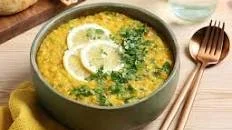
This is a very low cost recipe and can be batch cooked. When we try to improve our nutrition, it can feel like we have to spend a lot more money. Minimally processed plant proteins are often the best way to reduce our food budget.
This dish uses lemon juice and peel, garlic, ginger, turmeric, ground coriander, parsley and a little chill (optional) to ensure our taste buds are stimulated to produce plenty of stomach acid.
The preparation and cooking of the lentils makes them much easier to digest. They are soaked (for a couple of hours ideally, but anything from 30 minutes upwards is helpful) and then slowly cooked with plenty of liquid.
Lentils by themselves are not a complete protein. Consider adding a grain alongside, such as rice, because a grain and a pulse together provide a complete protein (the full range of essential amino acids).
Alternatively if you want to up the comfort factor, you could serve the stew with this fresh soda bread. It contains quinoa flakes, so together with the stew would provide a complete protein.
Ingredients
500g red lentils
1 onion
300g potatoes
300g carrots
2 lemons
4 garlic cloves
a thumb of ginger
1 chilli or 1/2 tsp chilli flakes (optional)
1 tsp ground coriander
stock powder
20g flat leave parsley
1.5 litres of stock
Method
Lentil prep (ideally 2 hours before)
Rinse the lentils in a bowl three times until the water runs clear. Now cover them with water in the bowl and leave to soak for at least 30 minutes, but ideally around two hours (this makes them more digestible).
When you are ready to cook…
Chop the onion finely, and chop the potatoes and carrots into small bite-sized pieces.
Add a little olive oil to your large pan and sauté the onion for 3-4 minutes, stirring often, until glossy.
Add the potatoes and carrots and sauté gently for 5 minutes, until glossy. Stir regularly to avoid sticking (you can add a splash of water if they start to stick).
Using a peeler, peel a couple of strips of lemon from the lemon (try to avoid the white pith). Chop or grate the ginger and garlic.
Once the veg is glossy, add the lemon peel, garlic, ginger, turmeric, ground coriander and chilli (if using). Stir for two minutes until fragrant.
Drain the lentils and add them to the pan, along with the stock. Bring to a boil, then simmer for 30 minutes. Stir occasionally.
It is ready when the lentils are tender. It should look thick and chunky but still a little soupy. If it seems too dry, add more water.
Remove the lemon peel. Season and serve with a squeeze of lemon juice and a little chopped parsley.
Find out more about how to improve your autoimmune health with my online program.